Bespoke Garden Room Design in Wirral
A well-designed garden room gives you a genuine extra space — a quiet home office, a studio, a gym or a garden lounge — without extending the house itself. We prepare the design and the drawings so you have a considered, properly insulated building that works all year round, ready for a builder to price and construct. We design only; we don't carry out the building work, which keeps our advice focused on getting the layout, siting and specification right for how you'll actually use it.
★★★★★5.0· 30 Google reviewsWho this is for
- Homeowners wanting a dedicated home office away from the main house
- Anyone needing a studio, gym, hobby space or quiet garden retreat
- Families short on indoor space but with usable garden to spare
- People who want a building designed for year-round use, not a summer shed
What's included
- A review of your garden, orientation and how you'd like to use the space
- A bespoke design sized and sited around light, access and the plot
- Existing and proposed drawings showing the building and its position
- Guidance on whether it's likely to be permitted development as an outbuilding
- Drawings for a Lawful Development Certificate where that's a sensible step
- Building-regulations drawings where your project needs them
- A clear pack a builder can quote and build from
What may be separate
- The building work itself (we are design-only — you appoint a builder)
- Structural engineer calculations, where the structure needs them
- Local authority planning and building-control fees
- Connecting services such as power, water or drainage runs (your contractor's trades)
What we do
How we help — Garden Rooms
Home office vs gym vs garden lounge
We design around the actual use — a quiet, well-lit office needs different glazing, layout and acoustics from a gym or a relaxed garden room.
Year-round insulation & glazing
Properly insulated walls, roof and floor plus the right glazing make the difference between a cold summerhouse and a space you'll use in January.
Siting for light & outlook
Where the building sits, which way it faces and where the doors and windows go all shape how bright and pleasant it feels through the day.
A building that suits the garden
Proportions, materials and roof form chosen so the garden room sits comfortably in your plot rather than dominating it.
Examples
Examples of this work
Photos, drawings and design visualisations from Sean's projects — each one labelled, so you always know what you're looking at.
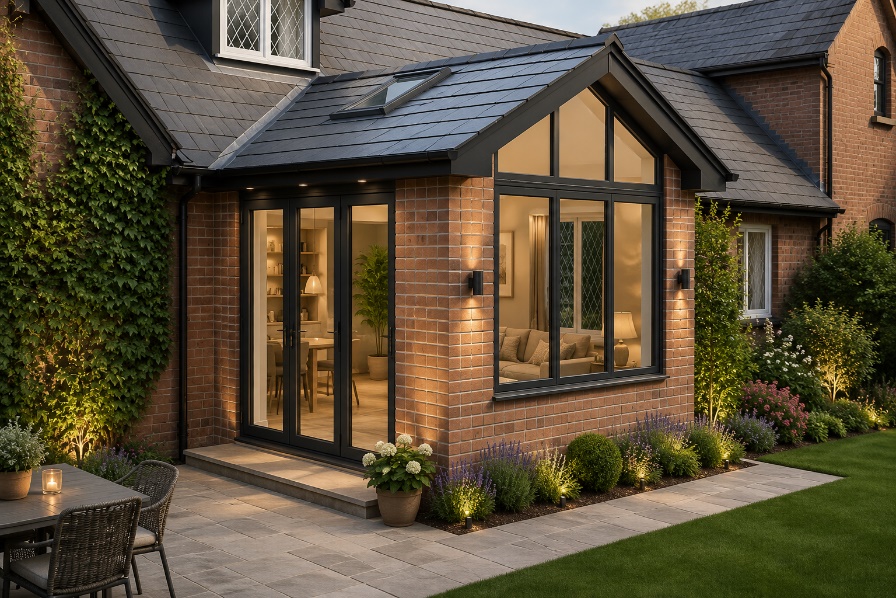 Design visualisation
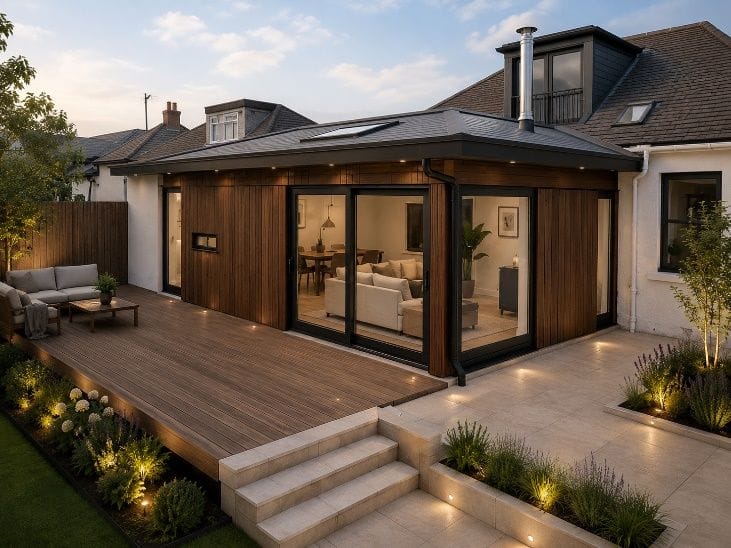 Design visualisation
Planning permission — is a garden room permitted development?
A garden room is usually treated as an outbuilding that's incidental to the house, and many fall within permitted development — which can mean a full planning application isn't needed. The limits are specific, though: it should be single storey, with a maximum eaves height of around 2.5m and an overall height of up to 4m for a dual-pitched roof, 3m for other roofs, or 2.5m where it sits within 2m of a boundary. It also shouldn't sit forward of the principal elevation, and outbuildings together shouldn't cover more than half the land around the original house. These are general limits and may not all apply to your property.
Designated land — conservation areas, and similar — has tighter rules, and flats and some properties don't have the same rights at all. Importantly, a garden room used for sleeping, or as primary or self-contained living accommodation, is not 'incidental' and would need planning permission. We advise on the likely route for your specific garden and prepare the drawings it needs — always subject to confirmation with Wirral Council (or your local planning authority).
Building regulations — when they apply
Building regulations are separate from planning. A small, detached, single-storey garden room often falls outside them — many are exempt below around 15 square metres of floor area, and up to about 30 square metres can sometimes avoid full approval depending on proximity to boundaries and the materials used. Above those thresholds, or where the building contains sleeping accommodation, the regulations are more likely to apply.
Any garden room intended for habitable or self-contained living use will need building-regulations approval covering structure, insulation, fire safety, drainage and ventilation. Where your project needs them, we prepare the technical drawings, and a structural engineer provides any supporting calculations. We'll give you an honest steer on which side of these thresholds your project is likely to fall — confirmed with building control.
What to send Sean
You do not need a full brief or drawings to get started. Send your name and one way to contact you — the rest is optional, and you can share more whenever it suits you.
Minimum to get started
- Your name
- A phone number or email address
- A sentence about what you're thinking of doing
Helpful extras if you have them
- A few photos of the garden and where you picture the room
- Your postcode and a rough idea of the size you have in mind
- What you'd use it for — office, gym, studio, garden lounge
- Whether you'd want it heated and used all year round
Not sure yet? That's fine — send what you have and Sean will guide you on the rest. Photos can follow by WhatsApp or email whenever you're ready.
Questions
Garden Rooms — common questions
Often a garden room is permitted development as an outbuilding incidental to the house, provided it stays within the height, position and coverage limits — but that depends on your property and isn't guaranteed. We advise on the likely route and prepare the drawings, always confirmed with your local planning authority.
Not under permitted development. A garden room used for sleeping, or as primary or self-contained living accommodation, isn't 'incidental' to the house, so it would need planning permission and building-regulations approval. We can advise on what that route involves.
Often a small, single-storey garden room is exempt — many are below the floor-area thresholds where the regulations bite. Larger buildings, those close to a boundary, or any with habitable or sleeping use are more likely to need approval. We'll give you an honest view, confirmed with building control.
Yes — that's usually the point. We design with proper insulation, glazing and heating in mind so the room is comfortable in winter as well as summer, not just a fair-weather space.
It depends on orientation, light, access and how you'll use the space. We look at all of that when siting the building — a home office and a garden lounge often want quite different positions and outlooks.
Yes — a clear drawing pack lets builders price the same scheme accurately rather than guessing, and gives you a fair comparison between quotes.
Related services
Full Architectural Design Services (Concept to Approval)
A complete, start-to-finish architectural service — from initial concept through planning and technical design, delivered with clarity and expertise.
Concept Design & Feasibility Studies
Explore what's possible with expert design insight and feasibility advice — helping you make informed decisions before committing.
Building Regulations Drawings & Technical Packages
Comprehensive technical drawings designed to meet UK Building Regulations — helping ensure compliance and a smooth build process.
Helpful guides
Areas we cover
Garden Rooms for homeowners across Wirral, including:
Ready to talk about your project?
All you need to start is your name and one way to contact you. A short description, postcode or a few photos help if you have them — but they're not required.