Concept Design & Feasibility Studies in Wirral
It's easy to fall in love with an idea before knowing whether it will work on your plot, win approval, or sit within your budget. A concept and feasibility stage answers those questions early. We explore a few design options, sketch how they could look and work, and give you a clear, honest view of the likely planning route and any constraints — so you can decide with confidence. We design only; we don't carry out the building work, which keeps our advice focused and impartial. Think of it as a low-cost way to test the idea before committing to a full project.
★★★★★5.0· 30 Google reviewsWho this is for
- Homeowners weighing up an extension, loft or remodel but unsure what's realistically possible
- Growing families deciding between options — extend, convert the loft, or reconfigure what's there
- Anyone who wants an honest read on planning likelihood before spending on full drawings
- Buyers assessing a property's potential before they commit
- People with a tricky plot, a conservation area, or possible Article 4 / permitted development questions
What's included
- A short briefing chat to understand how you want the home to work and your rough budget
- Initial concept sketches showing one or more design options
- Feasibility view on planning likelihood and the probable route (full application or permitted development)
- A plain-English note on key constraints — site limits, conservation area, Article 4, overlooking, access
- A clear recommendation on the preferred direction and sensible next steps
- Budget-aware guidance so options are grounded in reality, not wishful thinking
What may be separate
- The building work itself (we are design-only — you appoint a builder)
- Full planning or building-regulations drawings (these follow once you choose a direction)
- Structural engineer calculations where needed
- Local authority planning or building-control fees
- A formal measured survey (a feasibility study uses indicative sizes unless a survey is commissioned)
- Any guarantee of planning approval — likelihood is always subject to your local planning authority
What we do
How we help — Concept & Feasibility
Explore the options properly
Rather than locking onto the first idea, we put two or three concepts on the table — different layouts, footprints or approaches — so you can see and compare what each would give you before choosing a direction.
Test what fits the plot and budget
We sanity-check ideas against your site, its constraints and a realistic budget. That keeps the conversation honest and stops you designing something that won't fit, won't get approved, or won't add up financially.
Avoid wasted spend
Finding out early that a scheme is unlikely to gain approval — or won't deliver what you hoped — saves far more than the feasibility stage costs. It de-risks the decision before the bigger fees and the builder's quotes come into play.
A clear path into the full project
You finish with a recommended option and a likely planning route, ready to move smoothly into full design and the drawings your builder will price and build from — no false starts.
Examples
Examples of this work
Photos, drawings and design visualisations from Sean's projects — each one labelled, so you always know what you're looking at.
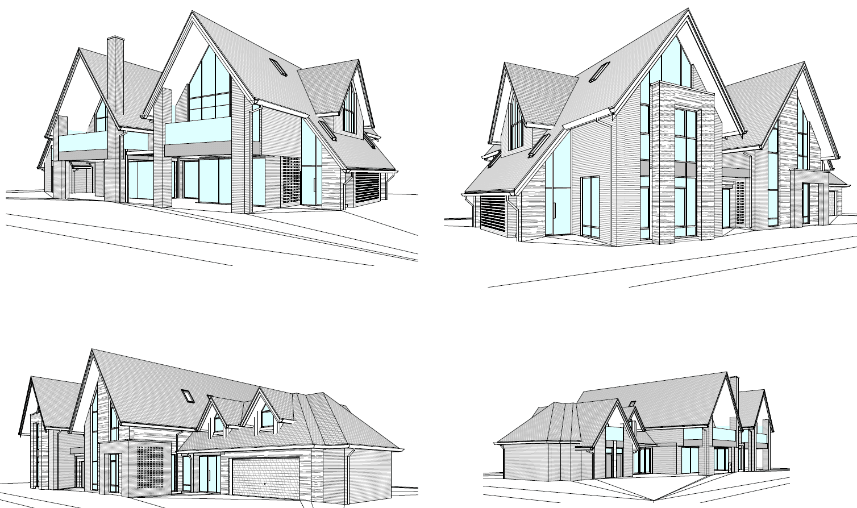 Drawing
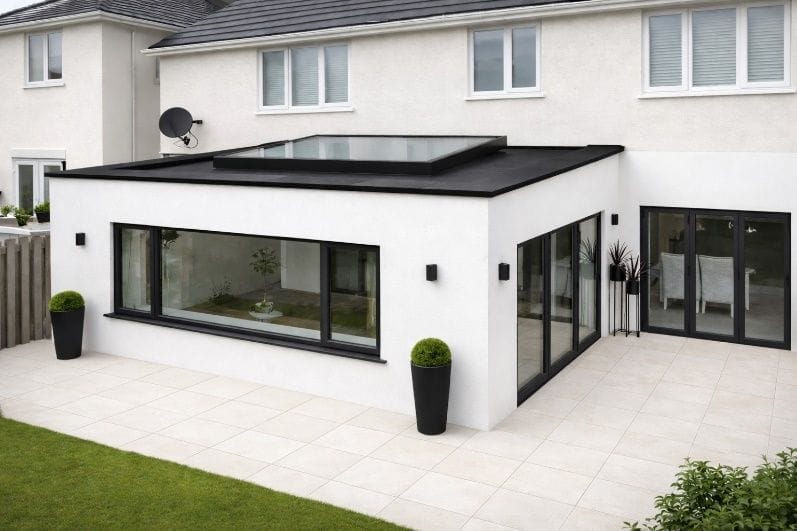 Design visualisation
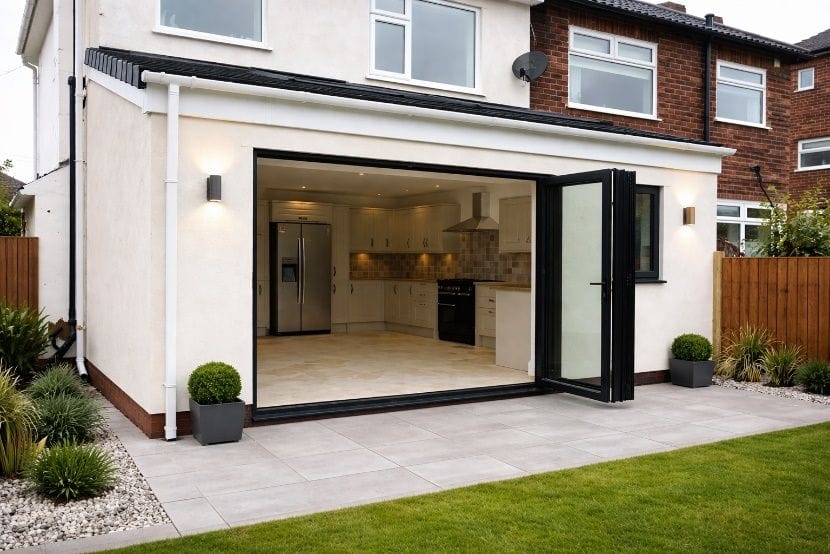 Design visualisation
How a feasibility study works
We start with a short conversation about what's frustrating you about the current home, how you'd like it to work, and roughly what you'd like to spend. The more honest the brief, the more useful the outcome.
From there we produce initial concept sketches — usually a couple of options — so you can picture the possibilities rather than imagine them. These are deliberately loose and quick; the aim is to explore and compare, not to finalise every detail.
Alongside the sketches we give you a plain-English feasibility note: how likely each option is to gain approval, the probable planning route, and any constraints we can see. You come away with a recommended direction and a clear sense of the next steps.
Planning likelihood and constraints
Part of the value of this stage is flagging the things that affect what's possible. Depending on your property and location, that may include permitted development limits, conservation area status, Article 4 directions that remove some PD rights, or site-specific issues like boundaries, access, trees and overlooking.
We'll give you an honest, hedged view of how each option is likely to be treated — but planning outcomes are never guaranteed and depend on the assessment of your local planning authority. Where a point is genuinely uncertain, we'll say so and suggest confirming it with Wirral Council (or your local authority) before you commit. The point of feasibility is to surface these questions early, while they're cheap to answer.
What to send Sean
You do not need a full brief or drawings to get started. Send your name and one way to contact you — the rest is optional, and you can share more whenever it suits you.
Minimum to get started
- Your name
- A phone number or email address
- A sentence about what you're thinking of doing
Helpful extras if you have them
- Your address or postcode (so we can check the property and its planning context)
- A rough idea of what you'd like to achieve — more space, a better layout, a specific room
- Any photos of the property, inside and out, that help us understand it
- A rough budget — only if you're comfortable sharing it; it helps keep options realistic
- Anything you already know about the site — conservation area, previous applications, restrictions
Not sure yet? That's fine — send what you have and Sean will guide you on the rest. Photos can follow by WhatsApp or email whenever you're ready.
Questions
Concept & Feasibility — common questions
Concept design is the early, exploratory stage — quick sketches and options to test what's possible and which direction is best. A full design develops the chosen option into the detailed planning and building-regulations drawings your builder needs to price and build. Feasibility comes first and feeds straight into it.
If you're already confident about the design and the route, you can go straight to a full design. But where there's real uncertainty — about what fits, what's likely to be approved, or whether the budget stacks up — a feasibility stage often saves money overall by avoiding a false start. It's most useful when the answer isn't obvious.
It gives you an honest, informed view of how likely each option is and the probable route, but it can't guarantee an outcome — that always rests with your local planning authority. Where something is genuinely uncertain we'll flag it and may suggest confirming it with Wirral Council before you commit further.
Not by default. Concept work usually uses indicative sizes and the information available so we can explore options quickly and affordably. A formal measured survey comes later, once you've chosen a direction and want accurate drawings — though we can arrange one earlier if your project needs it.
We keep options grounded in a realistic budget so you're not falling for something that won't add up. We don't carry out or price the building work ourselves — that's done by your builder from the final drawings — but we'll give budget-aware guidance so the concepts you're choosing between are sensible from the outset.
You get concept sketches of the option or options, a plain-English feasibility note on planning likelihood and constraints, and a clear recommendation on the best direction and likely route. From there it's a smooth step into the full design and drawings.
Related services
Full Architectural Design Services (Concept to Approval)
A complete, start-to-finish architectural service — from initial concept through planning and technical design, delivered with clarity and expertise.
House Extensions Design & Planning
Bespoke house extensions designed to enhance space, flow and property value — with drawings fully prepared for planning and construction.
Planning Permission Drawings & Consultancy
Clear, policy-aware drawings with expert guidance to give your planning application the best chance of approval.
Helpful guides
Areas we cover
Concept & Feasibility for homeowners across Wirral, including:
Ready to talk about your project?
All you need to start is your name and one way to contact you. A short description, postcode or a few photos help if you have them — but they're not required.